
Short answer: yes — as of a new closed-loop scheme from Multipanel UK, and Sign Trade Supplies is one of the first large users signed up to it.
For years the honest answer to this question was "not really." Here's what's changed, and how the new scheme actually works.
Why ACM was so hard to recycle
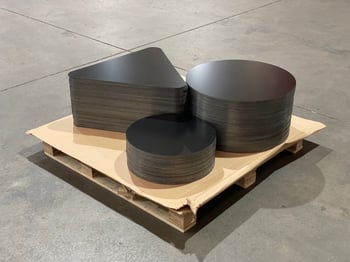
ACM (aluminium composite material) is made of two thin aluminium skins bonded to a polyethylene (PE) core. That sandwich construction is exactly what makes ACM strong, light, and easy to fabricate — but it's also what made it a recycling headache.
Once the aluminium skins are bonded to the PE core, you've got a mixed-material waste stream. Standard aluminium recycling can't process the plastic, and standard plastic recycling can't process the metal. Separating the two at scale wasn't commercially viable, so CNC offcuts and skeletal waste from sign fabrication almost always ended up in general waste or landfill.
What's changed: Multipanel UK's closed-loop scheme
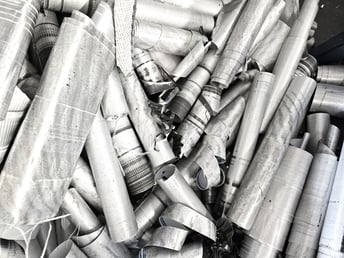
Multipanel UK — the only UK manufacturer of ACM sheeting — has launched a recycling scheme that finally solves the separation problem, using specialist machinery to strip the aluminium skin from the PE core:
- Aluminium skins are separated and sent for smelting back into aluminium billet.
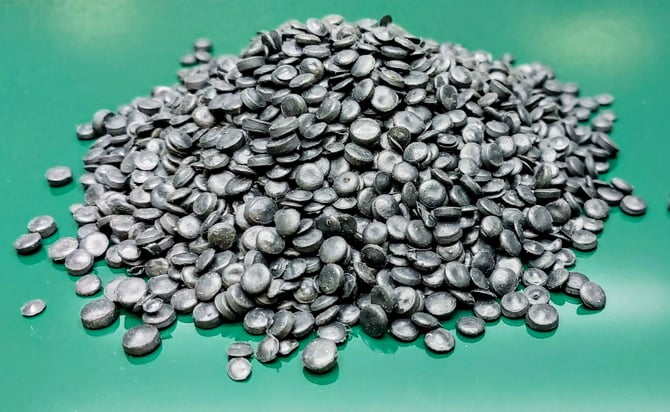
- The PE core is processed and pelletised, then shipped straight back to Multipanel UK to be used in the next production run of ACM sheeting.
It's a genuine closed loop: the material that comes off your CNC bed can end up back in new sheet stock.
How it works for large users like STS
Sign Trade Supplies was one of the first large users of Multipanel UK ACM to join the scheme. In practice, it looks like this:
- Skeletal CNC waste and offcuts are palletised on site as they're generated.
- The scheme operators collect the palletised waste directly.
- Waste is taken to a specialist UK processing site for skin/core separation.
- Aluminium goes to smelting; PE core goes back to Multipanel UK for re-manufacture.
No new equipment or process changes are needed at the fabrication end — just palletising waste instead of binning it.
What this means for sign makers
This is one of the first real steps toward tackling ACM's material waste problem at scale, rather than around the edges. As collection logistics and network demand grow, we'd expect this kind of closed-loop recycling to become the norm for aluminium composite waste, not the exception.
If you're a Trade+ customer working with Multipanel UK ACM through STS and want to know more about joining the scheme or how collections work, get in touch with your account manager.
FAQs
Can ACM sheeting be recycled in the UK?
Yes. A new closed-loop scheme from Multipanel UK, the UK's only ACM manufacturer, now allows aluminium skins and the PE core to be separated and reprocessed rather than sent to landfill.
Why was ACM difficult to recycle before?
ACM's aluminium skins are bonded directly to a polyethylene (PE) core. This mixed-material construction couldn't be processed by standard aluminium or plastic recycling streams, so most CNC waste and offcuts ended up in general waste.
What happens to ACM waste in the new recycling scheme?
Specialist machinery strips the aluminium skin from the PE core. The aluminium is sent for smelting back into billet, and the PE core is pelletised and shipped back to Multipanel UK to be used in new ACM sheeting.
Is Sign Trade Supplies part of the ACM recycling scheme?
Yes. Sign Trade Supplies was one of the first large users of Multipanel UK ACM to join the scheme, palletising skeletal CNC waste and offcuts for collection by the scheme operators.
Do I need new equipment to take part in ACM recycling?
No. Large users simply palletise their skeletal CNC waste and offcuts on site, ready for collection by the scheme operators — no changes to fabrication equipment or process are required.